Showing posts with label Democracy. Show all posts

Friday, 12 April 2019

Could a Citizen's Assembly Solve the Israel/Palestine Conflict?

The Changing Map of Israel and Palestine


What is a Citizen's Assembly?

A Citizen's assembly is a panel of selected members of the public, who deliberate on a particular subject or issue, and, with the help of evidence and objective expert testimony, arrive at an informed decision. A Citizen's assembly can vary in size (anything from a handful of people to an assembly numbering in the hundreds or even the thousands), and could be formed to deal with any kind of issue.

Often a Citizen’s Assembly is called upon as an option because a subject is regarded as "toxic". This means that elected officials would have a lot of trouble dealing with this issue effectively, as controversial decisions that will harm their chances at the next election tend to be shied away from. One example is the issue of abortion in Ireland: a Citizen's Assembly was formed to deal with this, and it eventually recommended a referendum

In Britain, the environmental pressure group Extinction Rebellion is currently campaigning for a national Citizen's Assembly to deal with the issue of Climate Change. There was even a Citizen's Assembly formed to deliberate upon Brexit, though its recommendations were ignored.

It has been theorised that a Citizen's Assembly that is called a "Multi-body Sortition" could be used to replace conventional representative democracy as we know it and run a country.

How is a Citizen's Assembly Formed?

A Citizen's Assembly is formed by means of a process called Sortition, which is a kind of random selection method. Think of it as something not dissimilar to being chosen to do jury duty; or being chosen as a lottery winner. Your name or you address, or some identifying signification will be picked out, and you're in the Assembly!

If a Citizen's Assembly runs for a considerable length of time, or has been formed to deal with more than one subject, its membership is often "refreshed". Meaning some of its members will leave and other members will join. But a whole Citizen's Assembly is never completely refreshed. That is there is never a point where every single member of the Assembly is replaced all at once - and so in this way, and through the use of facilitators and subject expert advisors - continuity can be assured.

Is this a Revolutionary New Idea?

No, not at all. There were Citizen's Assemblies used in ancient Greece, and apparently they even had a special machine which performed the function of sortition and selected the people who would form the Citizen's Assembly.

The kleroterion - Sortition machine used in Ancient Greece

What are the advantages of a Citizen's Assembly?

Well, firstly a Citizen's Assembly is truly representative. This is not the case in our modern conventional democracy, where only those people on the electoral role get to vote. This usually means that certain demographics - say those of a young age, or the homeless, or refugees (often referred to as “the 10% hard to reach”), will be under represented, while other demographics - say, white middle class males - will be over represented.

A citizen's assembly can ensure that every demographic can be represented in its proper proportions. Say 5% of your country or region's population are females of Indonesian origin aged 20 - 30. That means 5% of the Citizen's Assembly will be composed of that demographic.

Now, you may be asking yourself at this point, "Hold on a minute, if Sortition is a process of choosing participants entirely at random, then how could we guarantee a proportion like 5% of the Citizen's Assembly being composed of females of Indonesian origin aged 20 - 30?"

There is a way! Keep reading!

Secondly, it is much less likely that a member of a Citizen's Assembly will have a conflict of interest. This phenomenon is a stain on modern parliamentary politics, and often politicians are accused of having a vested interest in making sure that, say fossil fuel corporations, or certain pharmaceutical companies will not suffer penalties or even have to pay taxes. A good example of a conflict of interest is the fact that many British MP's are also landlords that rent out multiple properties, meaning that it may not be in their interests to pass laws that improve the rights of tenants. The aforementioned process of regularly "refreshing" the Assembly members also helps in this regard, as it prevents the build-up of power and vested interest.

Thirdly, the fact that decisions are evidence based is a perhaps the biggest advantage. Subject Matter Experts are used as advisers, though they do not make pronouncements ("Experts on tap - not on top"), and the findings and recommendations produced by the Citizen's Assembly are informed and objective evidence based decisions ("Public Judgement - not public opinion").

Random Stratified Sampling

The way we get a truly representative Citizen's Assembly is through the method of stratification. This "weights" the random sampling - or Sortition - procedure to ensure that the makeup of the Citizen's Assembly is truly representative (or to put it another way, this is the way you make sure that 5% of your Citizen's Assembly is composed of females of Indonesian origin aged 20 - 30, if that is appropriate).

And this is where we come to Israel/Palestine, where the stratification exercise would be a fascinating challenge.

Let's stratify! 

Citizen's Assembly Process Map

Holy Land Stratification

First, let's get 50% male, 50% female.

Next we go 50% Israeli, 50% Palestinian.

Then things start to get thorny - religious splits. Across the Holy Land we must take the correct proportions of Jewish, Muslim, and Christian citizens. Then also take the correct proportion of those of other faiths and of no faith.

Then things get even more complicated. For instance on the Palestinian side we must take the correct proportions of those who live in Gaza and those who live on the West Bank. If they are Muslim we must take the correct proportions of Sunni and Shia, Khawarij and other schools of thought. Should we stratify further? In Gaza the government is Hamas, but there are other factions present there also. Should they be represented? Same with the West Bank, where Fatah by no means enjoy blanket support.

Then we go to Israel, and we stratify by Ashkenazi, Mizrahi, Sephardic, Orthodox and other strata of the Jewish population. We must also take the correct proportion of the Palestinian-Israeli population, before we go to other groups like the Druze.

And we haven't even started on stratifying by age groups, income ranges, suburban dwellers versus country dwellers, more detailed ethnic compositions and so forth.

By now I'm sure you can see things are getting involved, and I believe we would need a fairly large Citizen's Assembly in order to get something like a correct representation of the various factions and groups that live in this land of trauma.

A Question of Experts

This poses a potential roadblock - not because there are no subject matter experts on the issue of Palestine and Israel: there are many. However what we need are objective experts. Or should I say, what we need are experts that are perceived to be objective. This is quite a challenge considering we are talking about the most polarised of subjects.

A Question of Settlers

The illegal Israeli settlers who occupy Palestine’s West Bank would be another potential stumbling block. Should they be represented and given a say in a Citizen's Assembly? This is a problematic issue, since the presence of the settlers is illegal under international law and they are widely viewed as one of the biggest stumbling blocks in the way of any kind of peaceful outcome. Also, there is a strong chance that the settlers would not be interested in any kind of treaty that most of the world would view as just and equitable, due to their absolutist stance.

Having said that, the point of a Citizen's Assembly is to bring together those who may have seemingly unbridgeable differences, so we should not abandon all hope at the start. And besides, solutions have been proposed that do take the presence of the settlers into account in a constructive manner.

Conclusion: The Need for a New Approach

For any of this to go ahead, we would need to have the political will to search for a peaceful, just solution to this conflict rooted in a deadly cocktail of quarrels over land, history, politics and religion. Pushing for a solution does not seem to be in Israel's interests at present, however, as it is sitting pretty with the backing of America's government, which grants it such boons as the recognition of Jerusalem as its capital while asking for nothing in return.

But ultimately - and even from the start, going right back to the Balfour Declaration - this conflict is a testament to how conventional politics has been and is still failing us. We need fresh approaches to these seemingly intractable dilemmas.

Otherwise all we can do is carry on looking the other way while our fellow human beings suffer and perish.


For more information on Citizen's Assemblies and Sortition, please visit https://www.sortitionfoundation.org/

Thursday, 24 March 2016

Protect Local Democracy

Or


Against All Odds


Please allow me to introduce myself...

I opened the latest Ealing 38 Degrees meeting with the following words:


I’ve always been a strong believer in environmental issues – protecting the earth and finding cleaner ways of generating energy.  In the past few years I have become more and more aware of the struggle of the Palestinian people for freedom and justice.  And I have become aware of how important local democracy is, and how local politics affects people’s lives.  All of these issues have been brought sharply into focus by the new law that this government wish to impose upon us.   This is a rule designed to prevent local authorities from making ethical choices when they decide where to invest their money.   This means barring them from boycotting Israeli firms that operate in the West Bank of Palestine, or weapons manufacturers, or corporations that they believe operate in an unethical manner.  With me to discuss these matters further are Ben Jamal from the National Executive of the Palestine Solidarity Campaign, Joel Benjamin of Community Reinvest and MoveYour Money, and Alex Goldhill of the Unite Community in Ealing.

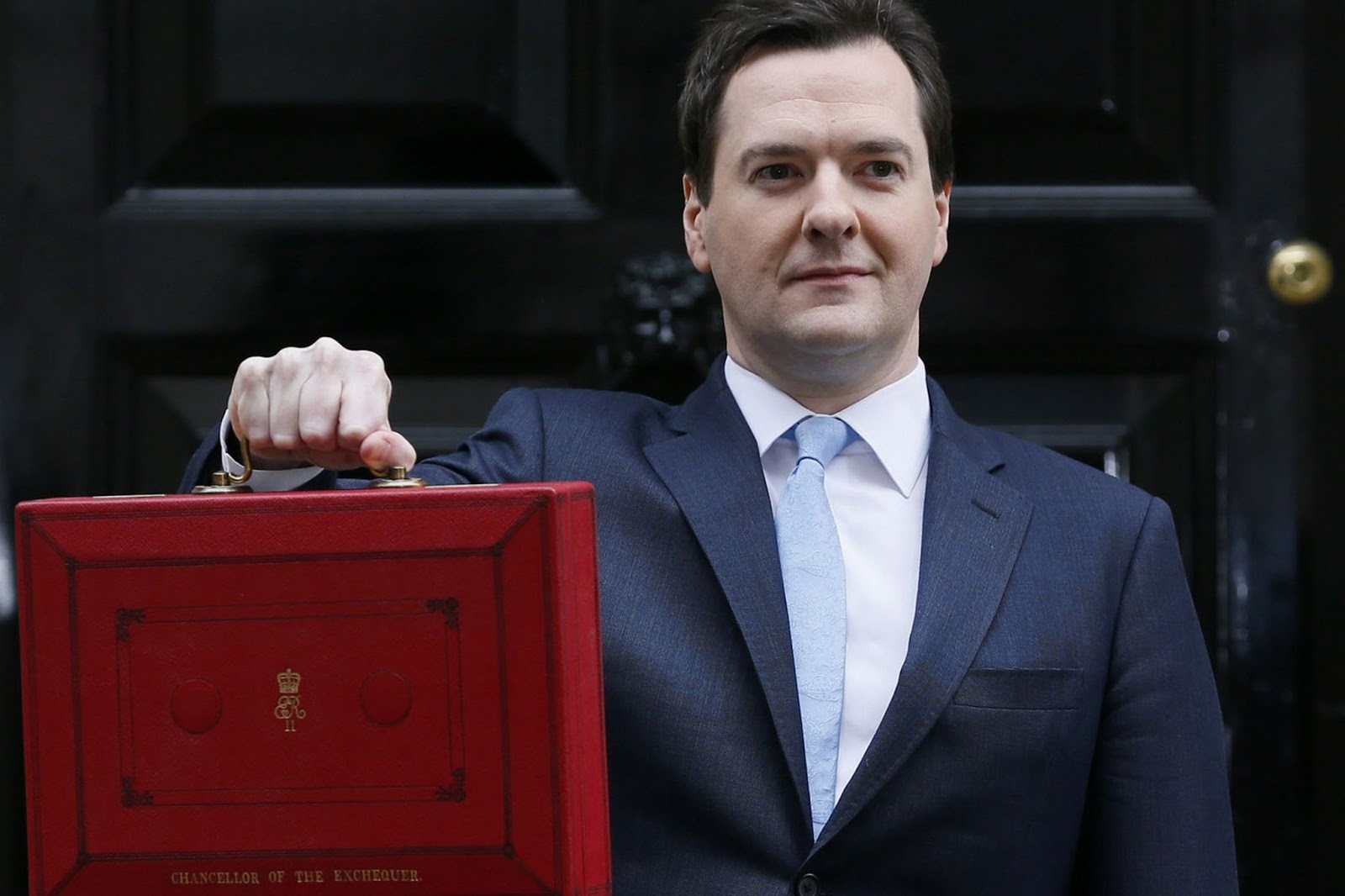
Alex spoke first, and gave us a summary of some of the historical precedents that contributed to the juncture at which we have arrived.  The battles between the Thatcher government and local authorities in the 1980s; the boycott movement that had risen to oppose Apartheid South Africa; and  George Osborne's insincere efforts to persuade us that there would be a "Devolution Revolution".  He also touched on the fact that spending cuts have savagely cut local government budgets - although Conservative run authorities have received more help from their government that councils run by other parties.

Destroying Revenues for Local Councils


Joel Benjamin was up next, and immediately gave us an eye opening statistic that less money is spent locally in the United Kingdom than in any other country in the West.  The vast majority of funds spent locally are from central government.  But things have become considerably worse over the last few years.

Cuts to council budgets from central government, and restrictions over the way that councils can seek loans to plug the resulting gaps in their balance sheets have lead to the rise of the "LOBO (Lender Option Borrower Option) Loan".  It is this kind of loan that has put private banks in charge of local authority debt, rather than the more stable local government loans that councils have been deterred from taking out.  These loans can appear to be much more reasonable at first, but after the initial fixed term ('teaser rate') has expired, the lender has the option to increase its Interest Rates, which puts the council in question at the mercy of private financial interests.  This means, in practice, that local authorities such as Hackney are currently spending 80% of their council tax revenues on servicing their debt to banks such as RBS, HSBC and Barclays.  There are some local authorities in Scotland whose debt repayments now stand at 100% of their council tax revenues.

And yet...

... despite this growing debt trap, and despite the centralization, and despite the broken devolution promises, local authorities remain rich reserves of spending and bastions of local democracy that are more accessible than their central government counterpart. And they can use their autonomy to pursue courses of action that may not chime with official government policy. And indeed why should they blindly follow policies they may not agree with? A council ward may be part of a Conservative constituency but may elect a Labour or a Liberal Democrat councilor - or a Green, or UKIP or maybe an independent. And so locally, within the limits of its influence, politics may work differently. That's localism; that's democracy. These are the principles that George Osborne and the Conservatives paid lip service to when they came to power.

What is BDS?

One of the ways that local democracy can practice its independence is through the peaceful tactic of Boycott, Divestment and Sanction. BDS for short. If an organization, or a corporation are providing services or manufacturing goods for a government that are repressive towards their own, or part of their own, or another country's population, then you do not avail yourself of their services or goods; and you withdraw any funds you may have invested in that organization. This "destroys a firm's cultural license to operate", and hopefully will change the behaviour of that organization or corporation, who may in turn find themselves forced to withdraw their services or investments from the country with the repressive government. And this in turn, hopefully, will change the behaviour of the repressive government. It's like a virtuous cycle.

Or sometimes it's just about the wish to be more virtuous. After all, can one sleep easily knowing that one's pension fund could be used to manufacture weapons that may target civilians? Would it not feel good to know that one's pension is not tied into the fumes of an oil refinery belching carbon into the atmosphere and warming it up? Or a fracking operation, poisoning the water and causing earthquakes?

And local governments in Britain have begun to use this BDS option. Leicester council have boycotted goods manufactured from the West Bank. Reading council have announced that they are divesting from fossil fuels.  Apart from the ethical issues, this is common sense: everyone knows how the price of oil is currently crashing (though £14 billion in British public service pension money is sill tied into fossil fuels); and the government's own guidelines warn of the risks in investing in settlements that break international law.

But councils were never going to be allowed to take these kind of actions with impunity. Not in a country that has become, as a friend of mine has dubbed, The Prostitute State.  A country where ministers mouth platitudes about protecting the environment while sitting on the boards of fracking companies.  A country where inquiries into tax evasion are themselves headed by tax evaders. These monied interests looked upon the actions of recalcitrant local authorities, and they did not like what they saw.

A New Law to Target BDS

Ben Jamal, from the Palestinian Solidarity Campaign now addressed the meeting.  He told us of new measures were announced in a press release on 7th October 2015 on the eve of the Conservative Party conference that month.  By sheer coincidence Jeremy Corbyn, a known sympathiser to the cause of Palestinian liberation, had been elected leader of the Labour Party a few weeks before.  Drafted by Greg Clark, Secretary of State for Communities and Local Government.  It spoke of the "divisive" nature of BDS that posed a "risk" to local communities, and that "measures" were going to be introduced to "oppose" BDS.  Matthew Hancock, Minister for the Cabinet Office, formerly introduced the measure during a trip to Israel.  They were implemented without a vote in the House of Commons.  One person who would have been very satisfied with this outcome is Gilad Erdan, who is Benjamin Netanyahu's no. 2 in the Israeli government, and has been tasked with coordinating the "Anti" BDS movement around the world.

The way these new measures work is by "second guessing". Say a council decides it no longer wants to invest in Hewlett Packard, which is known to be deeply involved in supplying the Israel Military in its blockade of Gaza and in the illegal occupation of the of the West Bank.  This could also apply to a council that decides to divest from companies that export weapons to, say, Saudi Arabia.  George Osborne could extrapolate that the true reason for divestment from this company is because of that company's actions in Israel, or that weapons manufacturer's intent to trade with the Saudis - and force the council to continue its investments. 

What is being done to fight this new law?

Firstly, a debate was finally called in the House of Commons concerning the fait accompli that had been presented to them in the shape of this new law.  The transcript for the debate can be read below:

http://www.palestinecampaign.org/local-government-ethical-procurement-debate-in-parliament/

I am glad to say that two MP's from my local area, Stephen Pound and particularly Andy Slaughter, stood strongly in opposition to the legislation.  Ben also told us of how Newcastle Council are planning a legal challenge to the government to resist these changes.

See below for some ways you yourself can not only join the fight against this law, but also ways you can find out how much your council owes in LOBO loans, or how much money your council has invested in fossil fuels.

Will justice prevail, or will the government's pernicious actions continue to damage human rights and the environment?  I cannot say, but the important thing is that we don't take this lying down.

"Every generation has to fight the same battles for peace, justice and democracy. And there is no final victory nor final defeat."
Tony Benn


Actions You Can Take


Protect Local Freedom to Boycott - Petition to David Cameron

Protect Local Democracy - Write to your MP and ask him or her oppose this new law

Go Fossil Free Local Gov Pensions Tool - Find how much your council pension fund has in fossil fuels 

Community Reinvest - A Report on which councils are divesting from fossil fuels and reinvesting in community energy

Debt Resistance UK - local authority debt audit - Find out how much bank LOBO Loan debt your council has & oppose it....

ShareAction Information on your pension and advice on lobbying and pressuring companies to clean up their act

Divest London Information on local government divestment campaigning across the Capital


A Selection of Further Reading


http://www.palestinecampaign.org/conservative-plans-ethical-investment/#sthash.CNb0cjJo.dpuf


http://www.ianfraser.org/how-city-banks-and-brokers-stitched-up-local-authorities-with-lobo-loans/

http://wire.novaramedia.com/2015/07/osbornes-budget-surplus-lock-is-a-scam-to-encourage-more-borrowing-from-the-city/

http://www.thecanary.co/2016/03/16/osbornes-budget-contains-nasty-surprise-local-services/

https://electronicintifada.net/content/billionaire-donor-using-british-council-combat-israel-boycott/15991

https://www.middleeastmonitor.com/blogs/politics/21545-uk-governments-attack-on-bds-part-of-wider-offensive

Thursday, 30 April 2015

The Occupy Rupert Murdoch Protest (Through My Eyes)


McCarthyMurdoch

Occupy Rupert Murdoch was an event that took place between the 23rd and the 29th of March 2015.  It was an event that I only bore witness to a part of, but one that I am proud to say that I supported.  It was also, in my opinion, long overdue.  And it is my hope that it could be the beginning of something greater.  Perhaps even something that will, in time, help to bring about greater justice and even healing to these islands.  Hope springs eternal.


Rupert Murdoch, it seems to appear, is the epitome of everything that freedom and democracy are not. From his newspapers or TV channels that attempt to the twist the political agenda of whichever country they are operating in to suit Murdoch's personal agenda, to the intimidation of workers who wanted to form an independent union that could operate in the places of work that he lords it over; from the unashamed tax dodging operations that not only avoided being classed as illegal but actually conformed to the laws that he and his kind subverted for their own gain, to the demonisation of ordinary working people to make them appear to be the enemy, when in fact it is Murdoch himself who should be identified as such.

For myself his character is summed up by the ugly covers produced by his primary UK tabloid, the Sun: such as "Gotcha!", the eulogising of the murder of Argentinian sailors who posed no threat to the British blockade of the Falkland Islands during the war to reclaim that territory in the early 1980s, or the "Will the last person to leave Britain please turn the lights out (or to put it another way You'd Better Vote the Way I Tell You To)" before the 1992 General Election. Or the ugliest cover of all (for me), the one that screamed "The Truth", before going on to tell bare faced scurrilous lies about the conduct of the supporters who had suffered in the worst disaster that befell British football since the wars.  For all these reasons and more I felt extremely strongly about this cause and knew I had to be part of it and bear witness.  The fact that it was taking place within a few minutes walk of where I work made my attending of this event as easy as it was imperative.


With this in mind I arrived at the site (the protest was being held in the "valley" between the Shard and the News Building, opposite London Bridge Station) on Monday evening at around 6.30 in the evening, full of curiosity at what I might find. At that point there weren't that many people there. It was a windy, cold and rainy evening, and I'd just missed the speaker who was due to address the crowd (Shahrar Ali, deputy leader of the Green Party).  However I did pick up two important things from this first night's activity:

1) There is now a Code of Conduct that governs behaviour during any direct action that Occupies Spaces.  This revolves around mutual respect, sobriety and non-violence towards your fellow occupiers, any observers whether they are sympathetic to your cause or not, and representatives of the authorities including the police.  This code of conduct is very important I feel because ultimately, whatever "uniform" we may wear, we are all part of the "99 per cent" (i.e. the part of the population that does not comprise the elite/super rich/robber barons/choose - your own description).  In this context we are united by what we have in common far more than anything that may divide us.

2) Occupy Rupert Murdoch have created a rough list of suggestions as to how the Press could be democratised and given true independence from monied interests and corporate advertising in order to give it some semblance of objectivity.


It was these two points that dominated our first assembly on that Monday night.  The new "Independent" press framework was very much in its infancy at this stage and I'm glad to say I was able to contribute to the discussion on how its "rough edges" could be "smoothed".  It was a very interesting and thought provoking discussion, and I was so absorbed in it, standing there in the wind and the rain, that I barely noticed that I was becoming ill.

This meant that, alas, I missed most of the subsequent days (aside from a quick "hello" on Tuesday when I dropped off some Jaffa Cakes for sustenance).  When I went back for my next 'proper' visit on the Friday evening the wind and rain returned with me. But I did turn up in time to see Des Freedman do his thing, and experience a curious moment of synchronicity.  I had been on the underground earlier that day reading a book about "The Bully from Tom Brown's Schooldays" and an organisation called "The Chartists" were mentioned.  The Chartists were the first to put press freedom to the front of the agenda in British politics.  This was the first time I had learned about about this movement, and in the book they were a bit of a confounded nuisance to the leading character (who is a professional upper class bounder).  However I found their mention fascinating as I am very interested in the roots of what we would call socialism or left libertarianism, and the Charters appeared to be an important landmark in this history.  Des Freedman addressed the Occupiers, and gave us a history lesson about... The Charters.  It's funny how these coincidences come up.

Since I wasn't 100% yet, I had to leave after this address, but I swore that I would return the next day, the day when Occupy Rupert Murdoch would truly live up to its billing.


28th March 2015

I missed the "People's Trial of Rupert Murdoch" which is a pity as it sounded very entertaining, but arrived in time to see the tail end of some musical entertainment. People were waiving Anarchy flags and there was a feeling of expectancy in the air.  At this point the event was still taking place in the little public square opposite London Bridge and the Shard - but it wouldn't be for long. 

After the music finished the Code of Conduct was read out again, and Donnachadh McCarthy, the organiser of the event, made sure that everyone who was to take part in the direct action that was about to ensue listened, understood, and agreed with this Code of Conduct.  After this we marched towards the heart of Rupert Murdoch's demesne - our intention was to knock on the door, and, see if we could gain entry.

The number of security guards and police lining the doorway of the News Building let us know that our presence was not welcome.

However, the protesters were not to be denied, and while the police and security guards were distracted by the main body of protesters marching up to the front door, they didn't see a couple of "insurgents", including Donnachadh himself, sneaking in behind them, having scaled a wall and come at the entrance from a different direction.  Once they did spot the "intruders" that had been stealing in a different way, the police and security guards moved to bar their entry and began to struggle with them. It was at this point that the main group (us) pushed against the line surrounding the News Building; and for a few moments pandemonium ensued.


I stood in front of the line of police and security guards, and saw that apart from a bit of pushing and shoving, no violence was taking place. A  couple of people did look like they would lose their heads at one point, but they were quickly removed by the protest leaders, and the moments of chaos culminated in all of us peacefully sitting down, linking arms, and beginning to chant "Peace! Love! Respect!"

Things settled down somewhat now, and speeches began by the protesters, as the loudspeaker was passed from person to person. Poems were recited, songs were sang by one or two people or by all of us, and testimonies were exchanged, engendering a feeling of togetherness as the police looked on. I believe the non-violent tactics of the protest leaders were very effective that night; and also the fact that Donnachadh was at pains to stress that the police were also part of the "99%"and so our battle was not with them.  And eventually at around midnight, the police withdrew from the scene of the protest, to much cheering and celebration from those that were taking part.

 By now we were down to the "hard core" of activists who were prepared to stick it out for the night.

Two events broke up the night - first Russell Brand popped by to wish us well, and he turned out to be a very nice chap who knew his football.  About an hour after that some guy appeared and started to (attempt) to hand out warnings (via a very unofficial and hastily assembled looking notice) that we were trespassing on private property.  Nobody took the flyer that he was trying to hand out, and after having "Peace! Love! Respect" chanted at him continuously for a while, he skulked off.


I didn't really get any sleep. The wind howled through the skyscrapers that surrounded us, sometimes threatening to blow away the little tents that sat defiantly in the front of the mighty News Building. As morning dawned, I could see the workers being ushered into an alternative entrance to the building (we never pretended this was anything more than a symbolic protest).

And so my experience ended.  They were still planning for another day's protest when I left them to it mid morning on 29th March.

So what did I learn from the experience of Occupy Rupert Murdoch? 

I learned (and still am learning) about the truly damaged state of British democracy.

I learned that there are people of real courage and integrity prepared to stand up to the forces causing that damage.

I learned (and still am learning) that there is something we can all do to play our part in this struggle.

I learned that I have so much still to learn.


------------------------------------------

I met some very inspiring people during the brief time I spent protesting with them.  And I didn't take pictures of any of them.  Because I'm crap like that.  However I did take a lot of pictures of banners!  A selection of them can be seen with this blog.

I have taken two photographs from the Occupy Rupert Murdoch week records.  I hope the good people who made it happen will not mind.

Links

http://occupythemedia.org.uk/ - The main website for the Occupy Rupert Murdoch Protest

http://www.theprostitutestate.co.uk/index.html - The book I'm currently reading, written by Occupy Rupert Murdoch organiser Donnachadh McCarthy.  And an eye opener to be sure.

https://www.facebook.com/?_rdr#!/groups/610896625686974/?fref=ts - Occupy the Media Billionaires.  The Facebook space for the group for people willing to help out in the battle against the corporate interests that threaten our future.

https://www.facebook.com/events/1542806512652040/ - Occupy Democracy May Event - The struggle for real democracy continues.  Get involved!